Conference Topics
NextG Computing Scalability
Deep Learning-Nlp AI Analytics
- Neuromorphic Computing
- AI Hardware Innovation
- Synergy of AI and 5G-6G
- Scaling AI Models
Deep Learning and Neural Networks
- Applications in image and speech recognition
- Predictive analytics and diagnostics
- AI-driven personalized medicine
- Medical imaging and robot-assisted surgery
- Sentiment analysis and text mining
- Language generation and translation
- Conversational AI and chatbots
- Autonomous vehicles and drones
- Robot-human interaction
- AI in industrial automation
AI in Healthcare
- Predictive analytics and diagnostics
- AI-driven personalized medicine
- Medical imaging and robot-assisted surgery
Natural Language Processing
- Sentiment analysis and text mining
- Language generation and translation
- Conversational AI and chatbots
AI Ethics and Fairness In Computing
Ethical considerations in AI development
- Security Algorithms in development of AI strategy
- Algorithmic trading and market prediction
- Fraud detection and risk management
- Economic modeling and forecasting
- Ethical considerations in AI development
- Regulatory frameworks and compliance
- AI bias and fairness
Natural Language Processing
- Autonomous vehicles and drones
- Robot-human interaction
- AI in industrial automation
AI in Finance and Economics
- Algorithmic trading and market prediction
- Fraud detection and risk management
- Economic modeling and forecasting
NextG sustainable infrastructure development
AI in urban planning and smart city solutions
- AI in urban planning and smart city solutions
- AI in Health CareI
- AI-Powered Assistive Technologies for Enhancing Accessibility
- AI in sustainable supply chain management
Smart Manufacturing and AI
- AI in sustainable supply chain management
- AI for disaster prediction and response in urban areas
- Smart grids powered by AI for efficient energy use
Sustainable Development and AI
- AI in renewable energy optimization and integration
- AI for water quality monitoring and management
- Predictive analytics for water scarcity mitigation
- Smart sanitation systems driven by AI
- AI-powered wearable devices
Organizing Committee
| Role | Members |
|---|---|
| General Chair |
Prof. Ketan Kotecha, Symbiosis Institute of Technology, Symbiosis International (Deemed University), Pune, India Prof. Mohammad Patwary, University of Wolverhampton, UK |
| Conference Chair |
Prof. Prashant K. Jamwal, School of Engineering and Digital Sciences, Nazarbayev University, Astana, Kazakhstan Dr. Aditi Sharma, Symbiosis Institute of Technology, Symbiosis International (Deemed University), Pune, India |
| Organizing Chair |
Dr. Aditi Sharma, Symbiosis Institute of Technology, Symbiosis International (Deemed University), Pune Dr. Pradeep Kumar Arya, Bennett University, Greater Noida Dr. Danish Ather, Amity University Tashkent Dr. Bikash Paul, International Digital University (IDU), Tashkent |
| Program Chair |
Dr. Jitendra Rajpurohit, Symbiosis Institute of Technology, Symbiosis International (Deemed University), Pune Dr. Tanupriya Chaudhary, UPES India Dr. Prabhat Shrivastava, IMS Gaziabad, India |
| Proceeding Chair |
Dr. Amit Joshi, Director – Global Knowledge Research Foundation Dr. Vishal Goar, Government Engineering College, Bikaner, India |
| Organizing Committee |
Dr. Aditi Sharma, Symbiosis Institute of Technology, Symbiosis International (Deemed University), Pune Dr. Pradeep Kumar Arya, Bennett University, Greater Noida Dr. Danish Ather, Amity University Tashkent Dr. Bikash Paul, International Digital University (IDU), Tashkent |
Technical Program Committee
| Role | Members |
|---|---|
| Technical Program Chairs |
Prof. Dharam Singh, CSE Department, NUST, Namibia Dr. Nilanjan Dey, CSE Department, Techno International New Town, Kolkata, India Dr. Arjun Singh, Centre of Cyber Security, Sardar Patel University of Police, Security and Criminal Justice, Jodhpur, India |
| Technical Program Co-Chairs |
Prof. Rajesh Bhadada, MBM University, Jodhpur Prof. Rajesh Kumar, MNIT Jaipur Dr. Kumar Gautam, Gwangju Institute Of Science And Technology, South Korea |
| Technical Program Committee |
Prof. Jungpil SHIN, The University Of Aizu, Japan Dr. Tu Nguyen, Department of Computer Science, Kennesaw State University, USA Prof Yu-Chen Hu, Providence University, Taiwan Prof. Sanjay Misra, Ostfold Univeristy College(HIOF), Halden Norway Dr. Chinmay Chakraborty, BITS Mesra, India Dr. Mohit Kumar, NIT Jhalandar, India Prof. Carlos Becker Westphall, Federal University of Santa Catarina, Brazil Dr. Achyuth Sarkar, NIT Arunachal Pradesh. Dr. Ankur Dumeka, WIT, Dehradun. Prof. Manalo Dalva Hina, ECE Paris, France Prof. Martin Lukac, Associate professor in computer science, Hiroshim city university, Hiroshima,Japan Dr. Tanupriya Choudhury, University of Petroleum and Energy Studies (UPES) Dehradun India Dr.Kassian T.T.Amesho, National Sun Yat-sen University,Taiwan Dr. Ankit Vishnoi, Graphic Era Deemed to be University, Dehradun Prof. Ting-Peng Liang, National Chengchi University Taipei, Taiwan Dr.Nedia Smairi, CNAM Laboratory, France Prof. Chandan Adhana, South Kazakhstan State Pedagogical Institute, Kazakhstan Dr. Tien Anh Tran, Department of Marine Engineering,Vietnam Maritime University,Vietnam Dr. M. Firoz Mridha, American International University, Bangladesh Prof. Xiao-Zhi Gao, University of Eastern Finland, Finland. Prof. Abrar A. Qureshi, Ph.D., University of Virginia’s, USA Prof. Louis M. Rose, Department of Computer Science, University of New York, USA Prof. Jungpil SHIN, The University of Aizu, Japan Dr. Ricardo M. Checchi, University of Massachusetts, Massachusetts , USA Prof. Brent Waters, University of Texas, Austin, Texas, United States Prof. Prasun Sinha, Ohio State University Columbus, Columbus,OH, United States Prof.N.M. van Straalen, VU University Amsterdam, Amsterdam, Netherlands Prof. Rashid Ansari, University of Illunios, USA Prof. Russell Beale, School of Computer Science – Advanced Interaction, University of Birmingham,England Prof. Dan Boneh, Computer Science Dept, Stanford University, California, USA Prof. Alexander christea, University of Warwick, London UK Prof. Mustafizur Rahman, Endeavour Research Fellow, Australia Prof.Hoang Pham, Rutgers University, Piscataway, NJ. USA Dr. Amal Zouhri, Sidi Mohammed Ben Abdellah University Fez, Morocco Dr. Mostafa EL MALLAHI, Sidi Mohammed Ben Abdellah University Fez, Morocco Dr. Mayank Aggarwal, Gurukul Kangri University, Haridwar Dr. Sumit Mittal , M.M.University, Mullana, Ambala, Haryana Dr. Manoj Diwakar, Graphic Era Deemed to be University, India Dr. Swullu Nggada, Higher Colleges of Technology, UAE Mr. Jyotir Moy Chatterjee, Lord Budha Education Foundation, Kathmandu, Nepal Dr. Anand Sharma, Secretary, CSI Lakshmangarh Chapter Dr. Chiranji Lal Chowdhary, VIT, Vellore Dr. Niranjanamurthy M, M.S. Ramaiah Institute of Technology, Banglore Dr. S.Swamynathan, College of Engineering Guindy , Anna University Chennai Dr. Mukesh Sharma, TITS, Bhiwani Dr. Amol Dhumane, Symbiosis Inst. Of Technology, Pune Dr. Vishal Kumar, Bipin Tripathi Kumaon Institute of Technology, Dwarahat, Uttarakhand Dr. Vishal Goyal, Punjabi University, Patiala, Punjab Dr. Dipali Vora, Symbiosis Inst. Of Technology, Pune Dr. Anuradha Pillai, Symbiosis Inst. Of Technology, Pune Dr. Jitendra Rajpurohit, Symbiosis Inst. Of Technology, Pune Dr. Sashikala Mishra, Symbiosis Inst. Of Technology, Pune Dr. Nitish Pathak, Bhagwan Parshuram Institute of Technology(BPIT), New Delhi, India Dr. Fauja Singh, MGS University, Bikaner Dr. Mohammed I. Marie, Faculty of Computers and Artificial Intelligence Helwan University Cairo, Egypt. Dr. Rajeeb Dey, NIT Silchar, India Dr. Soumen Nayak, IIT Madras, India Dr. Rituraj Jain, Department of Electrical and Computer Engineering, Wollega University, Ethiopia Dr. Rajesh Yadav,Department of Computer Science, University of Southampton Malaysia Dr. R. Elakkiya Birla Institute of Technology & Science, Pilani, Dubai Campus. Dr.Sumit Roy, Centre for E-Mobility and Clean Growth,Coventry University, UK. Dr.Sunil Gupta, University of Petroleum and Energy Studies, India Dr. Anil Kumar, Centre of Supply Chain Improvement University of Derby, United Kingdom (UK) Prof. Martin Everett, University of Manchester, England Dr. Arvind Yadav, Nirma University, Gujarat Prof. Feng Jiang, Harbin Institute of Technology, China Dr. K. D. Panchal, Govt. Engg. College, Surat, India Prof.Xiaoyi Yu, Institute of Automation, Chinese Academy of Sciences, Beijing, China Prof. Gengshen Zhong, Jinan, Shandong, China Prof. Abdul Rajak A R, Birla Institute of Technology and Science, Pilani, Dubai, UAE Ikram Ullah, School of Mathematics and Statistics, Central South University, China Dr. Vikas Chouhan, Canadian Institute of Cyber Security, Canada Dr. Jitendra Pandey, Middle East College, Knowledge Oasis Muscat, Oman Dr. Sunil Kumar Sharma, Department of Information Systems College of Computer and Information Sciences Majmaah University, Majmaah, Saudi Arabia Dr. Shivam Bhardwaj, Mccombs School of Business, University of Texas at Austin, USA |
Venue
How To Get Here
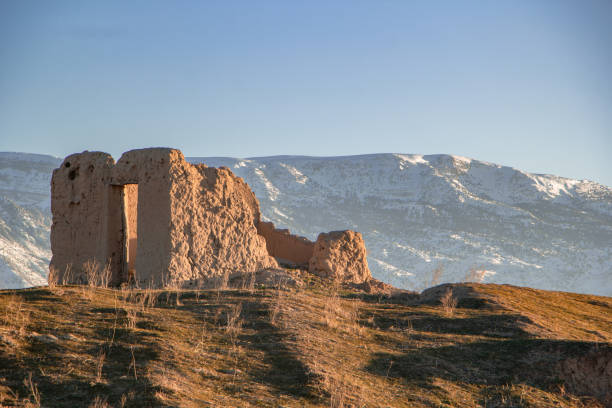
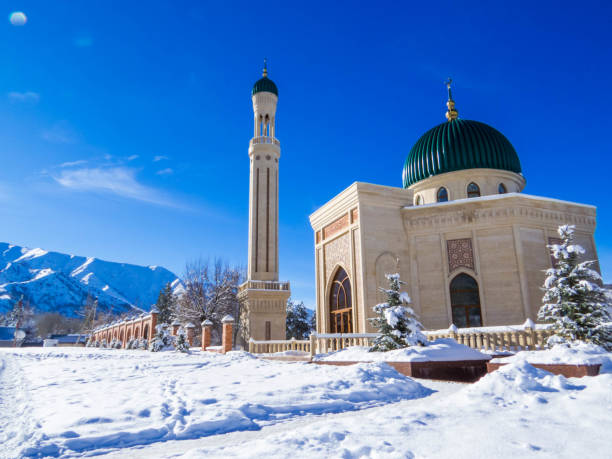
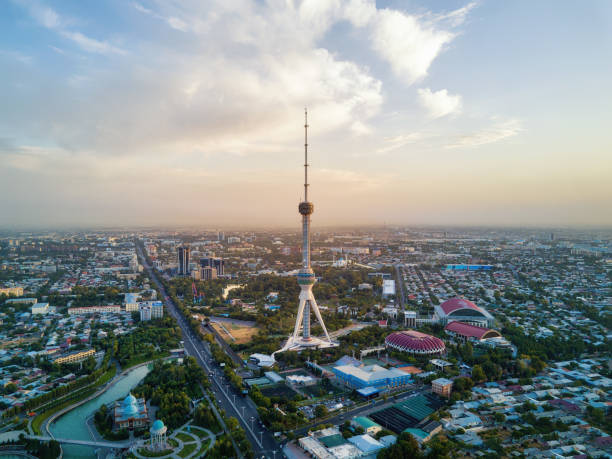
Tashkent, Uzbekistan Tashkent, capital of Uzbekistan and the largest city in Central Asia. Tashkent lies in the northeastern part of the country. The city probably dates from the 2nd or the 1st century bce and was variously known as Dzhadzh, Chachkent, Shashkent, and Binkent; the name Tashkent, which means “Stone Village” in Uzbek, was first mentioned in the 11th century. An important centre of trade and handicrafts on the caravan routes to Europe and East Asia, the city was conquered by the Arabs at the beginning of the 8th century and later became part of the possessions of various Muslim ruling lines before falling to the Mongols in the early 13th century.The city’s numerous institutions of higher education and research establishments include the university, founded in 1920, and various institutes of the Uzbek Academy of Sciences, set up in 1943. Also notable is the Navoi Public Library. The city’s numerous theatres, Uzbek and Russian, include the Navoi Theatre of Opera and Ballet. There are also a Palace of the Arts and several museums, parks, and stadiums. The city has been extensively rebuilt since an earthquake in 1966 left 300,000 people homeless. A few 15th- and 16th-century religious buildings and mausoleums survive, including the Barakkhan Madrasah (religious school).
By Plane
Nearest Airport: Tashkent International Airport (TAS) is the main international airport in Uzbekistan, located approximately 10 km from the city center. Once you arrive at the airport, you can take a taxi or use ride-hailing services to reach International Digital University in about 20-25 minutes. The airport is well-connected with regular flights to and from major international destinations.
By Car
IDU is easily accessible by car from various parts of Tashkent. If you are traveling from the city center, the university is about a 30-minute drive, depending on traffic. Tashkent has well-maintained roads, and there are ample parking facilities available at the university.
By Bus
Tashkent has an extensive public bus network. You can reach IDU by taking buses that connect major parts of the city. Check local routes and schedules for buses that pass near the university. Bus stops are well-marked, and the university is located within walking distance from several bus stops.
By Train
Tashkent has a modern and efficient railway system, with trains connecting the city to other regions of Uzbekistan. If traveling from other cities, you can take a train to Tashkent Central Station (Tashkent Xalqaro Terminal). From there, you can take a taxi or public transportation to reach IDU in about 20-25 minutes.
Facilities & Accommodations
When visiting Tashkent, Uzbekistan you'll find a range of facilities and accommodations to suit various preferences and budgets
Search Hotels